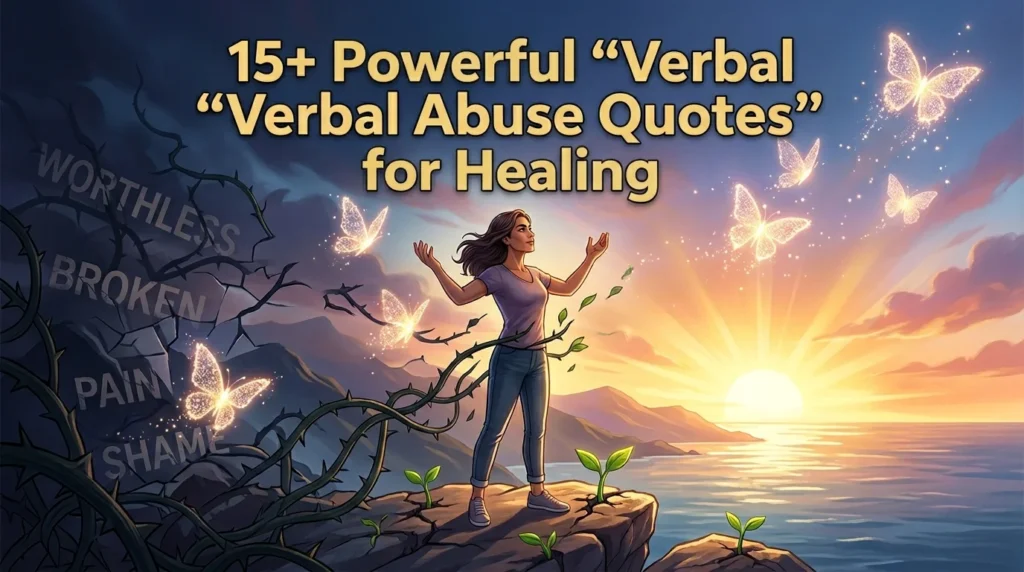

“Verbal Abuse Quotes” offer a meaningful way to reflect on emotional pain, recognize unhealthy communication patterns, and begin the process of healing from hurtful experiences. “Verbal Abuse” can deeply affect confidence, self-worth, and emotional stability, often leaving lasting scars that are not visible but strongly felt. These quotes help bring awareness to the impact of harmful words while also offering comfort and strength to those who have experienced them. By exploring these powerful insights, readers can find validation, emotional clarity, and encouragement to move forward with resilience, self-respect, and a stronger sense of inner peace.
Mindset Verbal Abuse Quotes
- “Maya Angelou: ‘People will forget what you said, but they will never forget how you made them feel.’”
- “Brené Brown: ‘Vulnerability is not weakness, it is our greatest measure of courage.’”
- “Oprah Winfrey: ‘Turn your wounds into wisdom.’”
- “Nelson Mandela: ‘I never lose. I either win or learn.’”
- “Jim Rohn: ‘You are the average of the five people you spend the most time with.’”
- “Tony Robbins: ‘Where focus goes, energy flows.’”
- “Eleanor Roosevelt: ‘No one can make you feel inferior without your consent.’”
- “Mark Twain: ‘Don’t let schooling interfere with your education.’”
Resilience Verbal Abuse Quotes
- “Nelson Mandela: ‘The greatest glory in living lies not in never falling, but in rising every time we fall.’”
- “Viktor Frankl: ‘When we are no longer able to change a situation, we are challenged to change ourselves.’”
- “Helen Keller: ‘Although the world is full of suffering, it is also full of the overcoming of it.’”
- “Oprah Winfrey: ‘Challenges are gifts that force us to search for a new center of gravity.’”
- “Confucius: ‘Our greatest glory is not in never falling, but in rising every time we fall.’”
- “Maya Angelou: ‘You may encounter many defeats, but you must not be defeated.’”
- “Winston Churchill: ‘If you are going through hell, keep going.’”
- “Robert H. Schuller: ‘Tough times never last, but tough people do.’”
Communication Verbal Abuse Quotes
- “Stephen Covey: ‘Seek first to understand, then to be understood.’”
- “Carl Rogers: ‘When someone really hears you without passing judgment, it feels damn good.’”
- “Peter Drucker: ‘The most important thing in communication is hearing what isn’t said.’”
- “Marshall Rosenberg: ‘Words are windows, or they’re walls.’”
- “Eckhart Tolle: ‘Most human pain is unnecessary and self-created.’”
- “Shannon L. Alder: ‘Before you speak, let your words pass through three gates.’”
- “Brené Brown: ‘Clear is kind. Unclear is unkind.’”
- “Epictetus: ‘We have two ears and one mouth so we can listen twice as much as we speak.’”
Self-Love Verbal Abuse Quotes
- “Lucille Ball: ‘Love yourself first and everything else falls into line.’”
- “RuPaul: ‘If you can’t love yourself, how in the hell are you gonna love somebody else?’”
- “Oscar Wilde: ‘To love oneself is the beginning of a lifelong romance.’”
- “Louise Hay: ‘You have been criticizing yourself for years, and it hasn’t worked.’”
- “Maya Angelou: ‘I don’t trust people who don’t love themselves.’”
- “Rupi Kaur: ‘How you love yourself is how you teach others to love you.’”
- “Brené Brown: ‘Talk to yourself like someone you love.’”
- “Tyra Banks: ‘You have to love yourself no matter what.’”
Overcoming Challenges Verbal Abuse Quotes
- “Albert Einstein: ‘In the middle of difficulty lies opportunity.’”
- “Thomas Edison: ‘I have not failed. I’ve just found 10,000 ways that won’t work.’”
- “Steve Jobs: ‘Sometimes life hits you in the head with a brick. Don’t lose faith.’”
- “Les Brown: ‘Shoot for the moon. Even if you miss, you’ll land among the stars.’”
- “Henry Ford: ‘Whether you think you can or you think you can’t, you’re right.’”
- “Dalai Lama: ‘Remember that sometimes not getting what you want is a wonderful stroke of luck.’”
- “Zig Ziglar: ‘Difficult roads often lead to beautiful destinations.’”
- “Muhammad Ali: ‘Don’t count the days, make the days count.’”
Key Takeaways from the Quotes
Understanding verbal abuse and emotional strength is about recognizing patterns in communication, rebuilding self-worth, and developing resilience. These quotes highlight how mindset, communication, and self-love play a critical role in healing emotional wounds and protecting mental well-being. Applying these lessons helps transform painful experiences into personal growth and emotional intelligence.
| Quote | Theme/Subcategory | Lesson/Takeaway | Actionable Tip |
| “No one can make you feel inferior without your consent.” | Mindset | Control your emotional response | Set mental boundaries in toxic situations |
| “Words are windows, or they’re walls.” | Communication | Language shapes relationships | Choose calm responses in conflict |
| “Turn your wounds into wisdom.” | Self-Love | Healing creates strength | Reflect on past pain for lessons |
| “The greatest glory is in rising after falling.” | Resilience | Growth comes from recovery | Keep going after setbacks |
| “Clear is kind. Unclear is unkind.” | Communication | Clarity prevents emotional harm | Speak directly but respectfully |
| “Love yourself first.” | Self-Love | Self-worth is foundational | Practice daily self-affirmation |
| “If you’re going through hell, keep going.” | Resilience | Don’t stop in hardship | Focus on progress, not pain |
| “In difficulty lies opportunity.” | Overcoming Challenges | Problems contain growth | Look for lessons in every struggle |
User Takeaways Section
Set emotional boundaries by recognizing harmful language early and choosing not to internalize it
Strengthen self-worth by practicing daily self-respect and positive self-talk
Improve communication by focusing on clarity, calmness, and listening before reacting
Build resilience by viewing challenges as lessons instead of permanent setbacks
Prioritize healing by surrounding yourself with supportive and emotionally healthy people
Conclusion About Verbal Abuse Quotes
Understanding “Verbal Abuse Quotes” helps shine a light on the emotional impact words can have on a person’s mind and heart. Throughout this article, we explored powerful insights that reveal how harmful communication affects confidence, relationships, and mental well-being. At the same time, these quotes also show that healing is possible through awareness, self-love, and resilience. When you recognize toxic patterns early, you gain the strength to protect your peace and rebuild emotional balance. Let these reflections serve as a reminder that your value is never defined by someone else’s words, but by how you choose to rise above them with courage and self-respect.
FAQs About Verbal Abuse Quotes
What are Verbal Abuse Quotes used for?
They are used to highlight emotional pain caused by harmful words and to help people recognize toxic communication patterns. These quotes also provide comfort, awareness, and motivation for healing and self-growth. Many readers use them for reflection, social sharing, or personal empowerment during difficult emotional experiences.
Why are Verbal Abuse Quotes important?
They are important because they help people understand the emotional damage caused by negative language. These quotes raise awareness about mental health, encourage healthy communication, and support healing. They also remind individuals that they are not alone in experiencing emotional struggles and can recover with time and support.
Can Verbal Abuse Quotes help with healing?
Yes, they can support emotional healing by validating feelings and helping individuals process painful experiences. Reading these quotes can offer perspective, reduce emotional isolation, and inspire self-reflection. While not a replacement for therapy, they can be a meaningful part of personal recovery and emotional awareness.
How do Verbal Abuse Quotes affect mindset?
They influence mindset by encouraging self-awareness and emotional strength. These quotes help people recognize harmful patterns and shift toward healthier thinking. Over time, they can inspire confidence, emotional resilience, and a stronger sense of self-worth, especially for those recovering from toxic communication or relationships.
Who can benefit from Verbal Abuse Quotes?
Anyone who has experienced emotional hurt, toxic communication, or low self-esteem can benefit. They are especially helpful for individuals seeking healing, personal growth, or clarity in relationships. Even readers interested in psychology or emotional intelligence can gain valuable insights from them.
Are Verbal Abuse Quotes based on real experiences?
Many quotes are inspired by real-life emotional experiences, observations, and psychological insights. Some come from famous thinkers, writers, and leaders who studied human behavior. While not all are direct personal stories, they often reflect universal emotional truths about communication and relationships.
Can Verbal Abuse Quotes improve relationships?
Yes, they can improve relationships by promoting better communication awareness. These quotes encourage people to speak more kindly, listen actively, and avoid harmful language. They also help individuals set boundaries and understand the importance of respect and empathy in healthy relationships.
Why do people search for Verbal Abuse Quotes?
People search for them to find emotional validation, healing support, and clarity about toxic experiences. These quotes are also used for inspiration, content sharing, and raising awareness about mental health and emotional well-being in relationships, friendships, and family dynamics.
Do Verbal Abuse Quotes help self-esteem?
Yes, they can support self-esteem by reminding individuals of their worth and encouraging self-respect. Reading empowering messages helps shift negative thinking patterns and reinforces positive self-belief, especially for those recovering from emotionally harmful environments or criticism.
How should I use Verbal Abuse Quotes in daily life?
You can use them as daily reminders, journaling prompts, or motivational reflections. Sharing them on social media or revisiting them during emotional struggles can provide comfort. Over time, they help build emotional strength, awareness, and healthier communication habits.